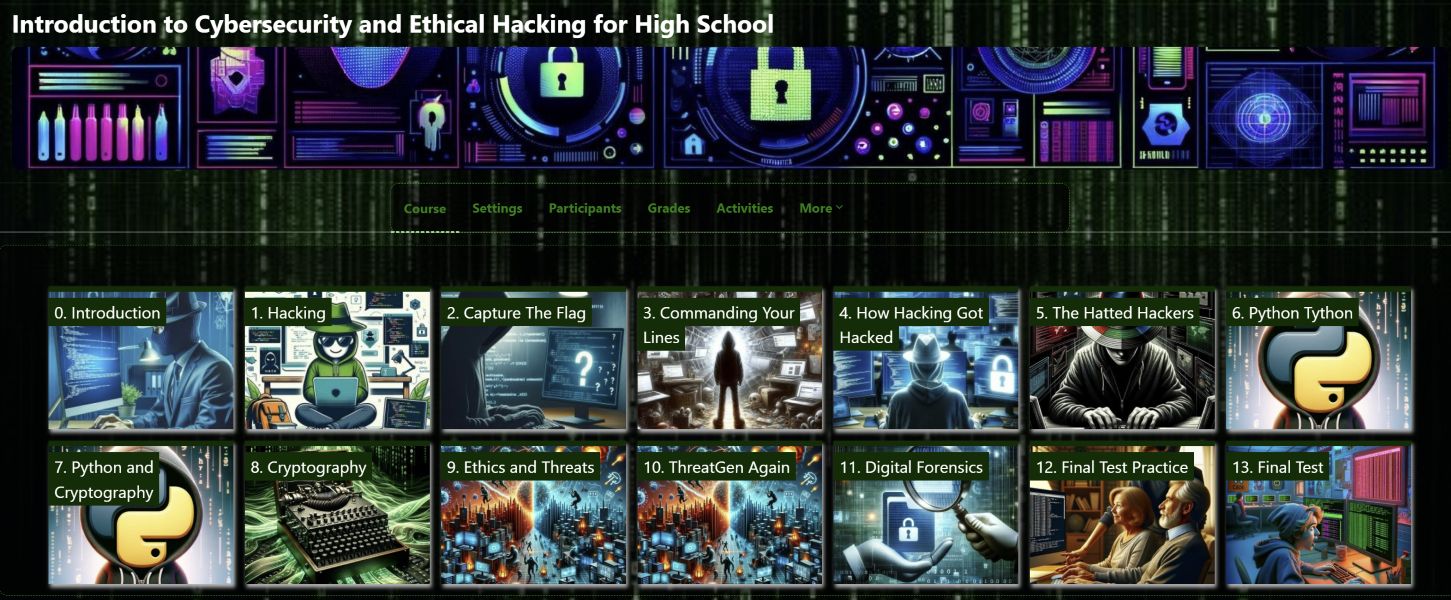
A few years ago, I was asked to come up with a cybersecurity course for secondary school students. As there are already a lot of great online resources for this, my first port of call was to see what the landscape was and whether the quality was good enough. The truth is, there is already a good amount of great stuff, but nothing short enough for what I was tasked with. A 14-lesson course spread over seven weeks is just not enough time to get into the detailed technical aspects of security, hacking and defending yourself online. So I decided to do a bit of everything and give the students a taster, hopefully giving them enough interest over the seven weeks for them to want to delve in deeper on their own. This became the ‘Introduction to Cybersecurity and Ethical Hacking’ course. The course is housed on Moodle, is freely accessible and features a collection of great free and paid online resources, from Cylab Security Academy, Netsim network simulator, GCHQ’s CyberChef cryptography web app and ThreatGen Red vs Blue hacking simulator game.
Cylab Security Academy
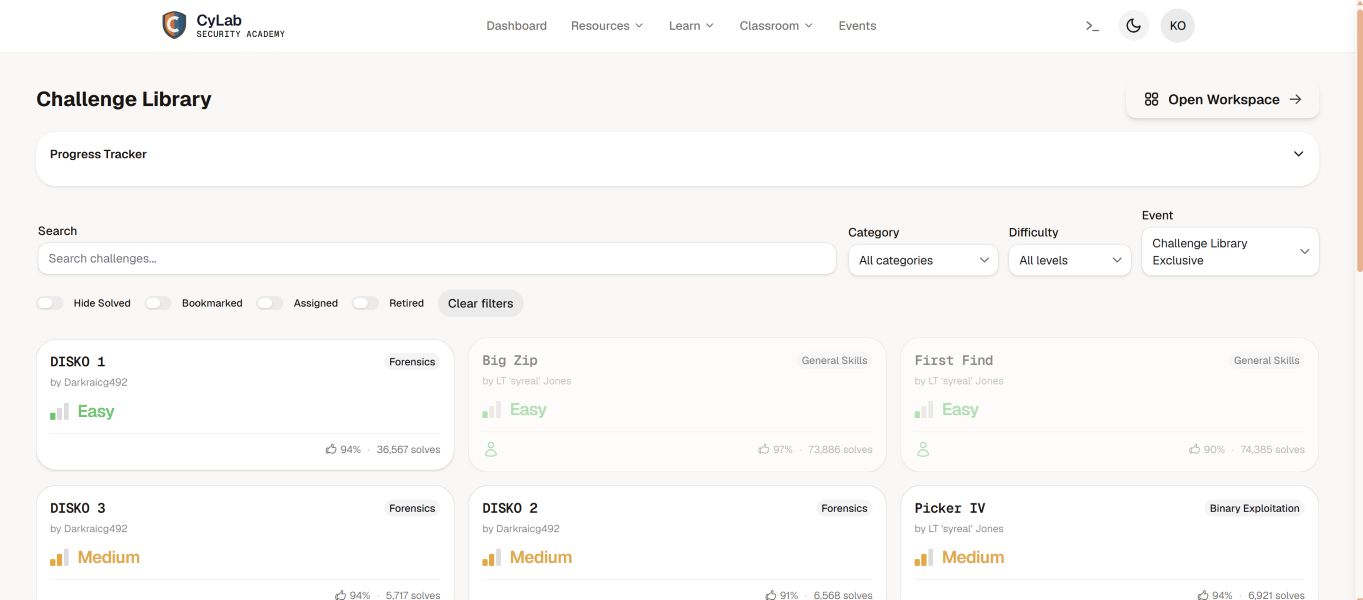
Introduction to Cybersecurity and Ethical Hacking mostly revolves around Cylab Security Academy activities. This was previously picoCTF by Carnegie Mellon University, which is a great Capture-The-Flag hacking competition platform, which has full instruction guides on cybersecurity and hacking education. It even has its own built-in terminal, so you don’t have to leave the platform to solve the challenges. My course touches on theory a little bit, but leans heavily on the instruction from Cylab Academy. This is a great, fun website which, along with the hacking challenges, used to have yearly competitions. The move to Cylab was only a few months ago, but I assume these will continue.
Netsim
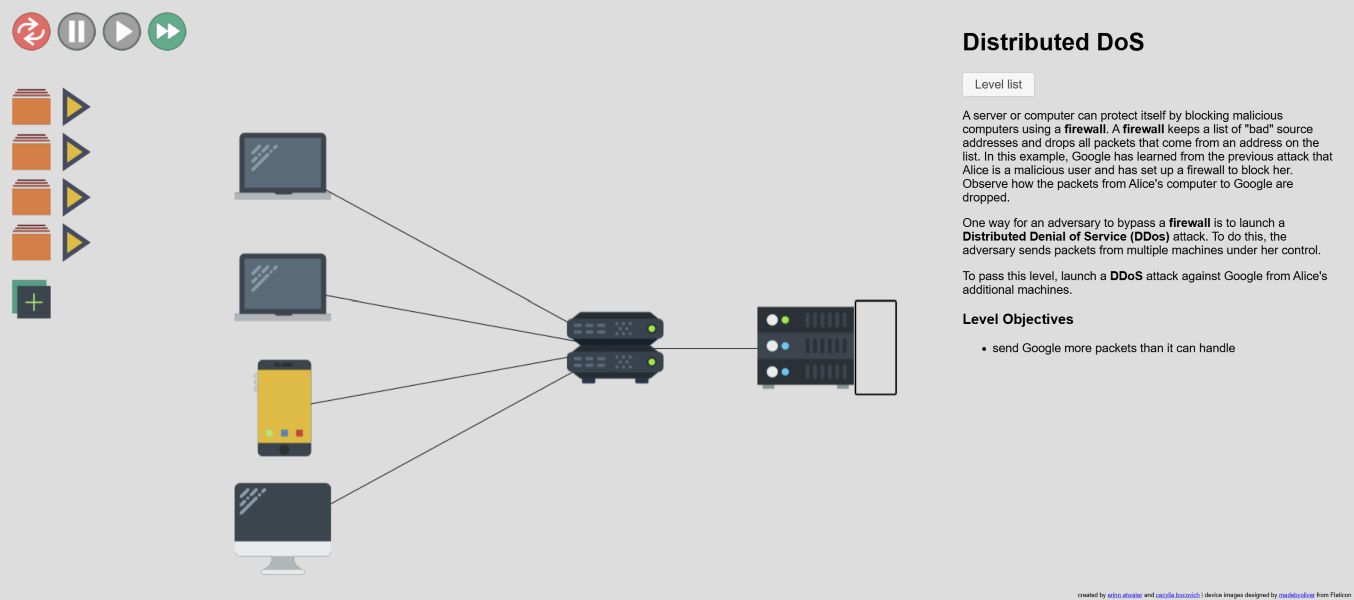
Netsim network simulator is a great little tool which is available online, but also on github for installation on your own server. It has 13 simulated activities covering networking basics, spoofs, Denial of Service, and other hacking attacks. It’s short and sweet, and can be done in about 1 lesson. It gives students an introduction on how the internet can facilitate and defend against hacking.
CyberChef
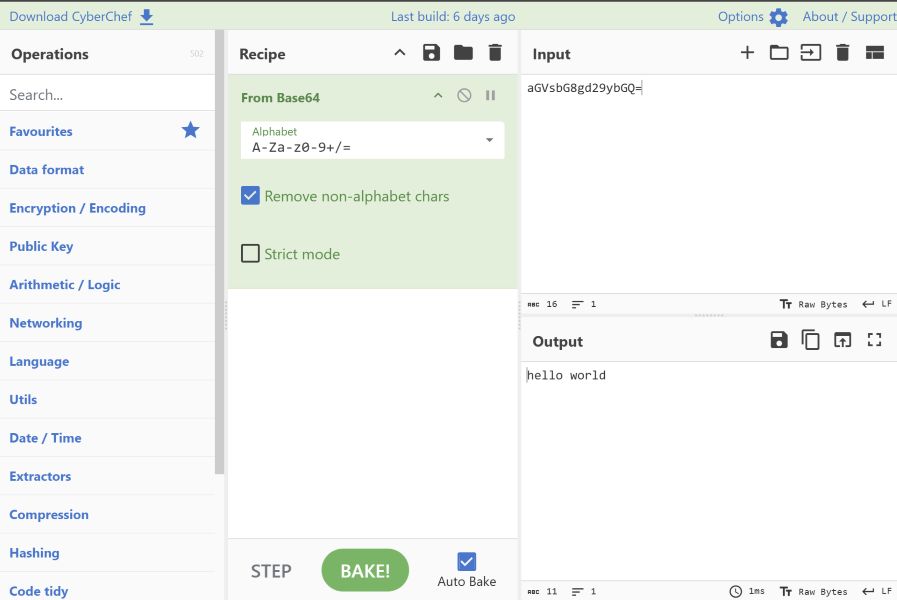
Then there is the CyberChef web app, also known as ‘the Cyber Swiss Army knife’. It is created and maintained by GCHQ, the intelligence and security agency of the British government. This is also available on github, but it is hosted on their own server. It contains nearly every cryptography tool you can think of, allowing you to do data formatting, encryption, encoding, compression, hashing, forensics and so much more. Cylab Security Academy actually now has CyberChef built into their platform.
ThreatGen Red vs Blue
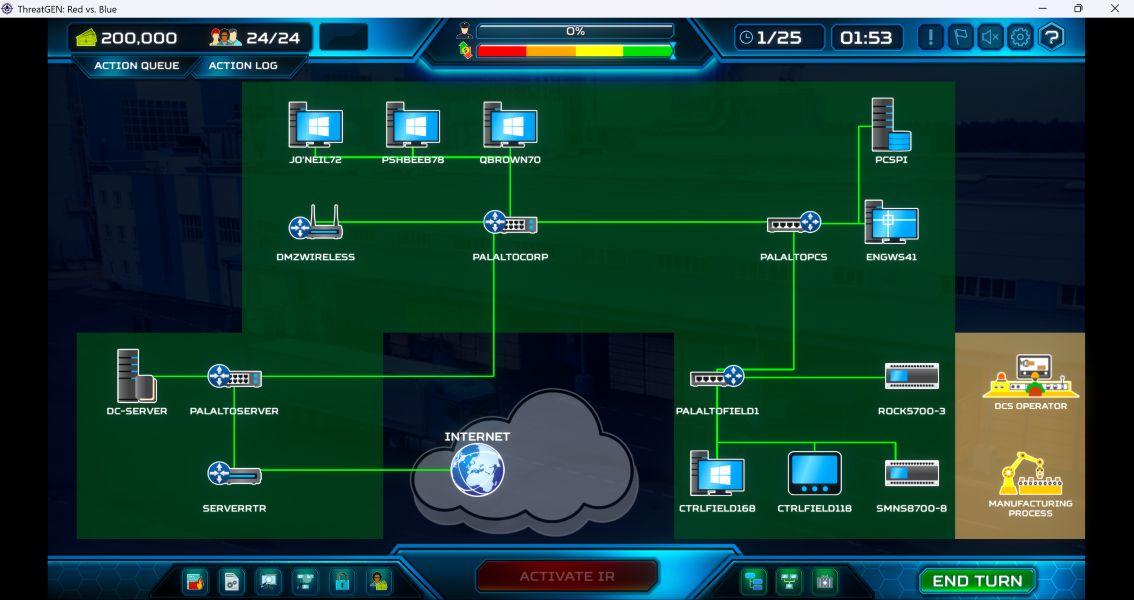
Finally, there is ThreatGen Red vs Blue, a fun hacking simulator game. In it, you can either be the defender of a company’s network infrastructure, doing training, installing patches, fighting off attacks, or you can be the hacker group, doing surveillance, and launching several types of attacks like phishing, social engineering, and many more. There is a bit of a learning curve to it, but once you start, it can really get your heart pumping! This is the only paid resource, and currently costs about $15 on Steam, but is available on a monthly or yearly subscription.
The course is designed for Grade 8 students and is designed to be guided by a teacher or instructor. However, it can be adapted for other high school or secondary school classes and most, if not all of it can be done without supervision. At the end, there is a self-marking final assessment designed as a standalone CTF hacking exercise, which tests the students on some activities they would have previously done on Cylab Academy. This also provides students with a certificate based on their level of completion.
There are currently no lesson plan resources available but I will be working on that soon. Also, the Moodle course is view only, so everything is accessible via Guest access. If you are interested in using it, I would love to hear from you, and that will encourage me to get a move on with the lesson plan instructions and teacher guides. The link to the course is below:
Introduction to Cybersecurity and Ethical Hacking for High School
I hope you all enjoy it!