Why our education systems are the Wrong Software for Neurodivergent Hardware.
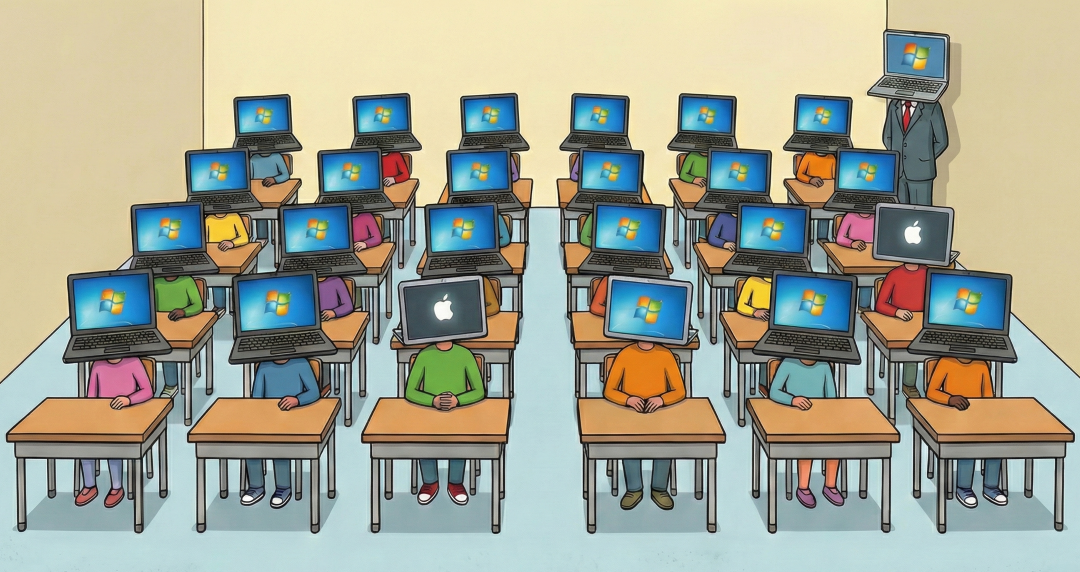
Picture the education system as a piece of software only designed to run on Windows PC students, but 10% of students run on Mac. The education system software doesn’t run natively on Macs so needs to use a virtual machine, special software that pretends to be a Windows PC. It works, but with overheads, like using more RAM, processor and hard disk resources. In this scenario, the Mac is the neurodivergent mind, which needs to adapt to the education system designed for different hardware and in turn takes more effort than others to do the same thing. The perfect solution would be for that software company to make a universal app that works on all systems, natively.
Using the Mac/PC comparison to describe neurodiversity is not my idea, and definitely not new (check out this post and article). But it's a great way to describe how it is. We are still seeing and hearing about ADHD and Dyslexia simply as learning ‘Disabilities’, but another narrative also exists. With roughly 10% of the global population being affected by dyslexia, and with evidence of certain unique abilities, it should really be seen as a natural difference rather than a niche disability. And with large overlaps with ADHD, the same sentiment applies to that too. Let’s look at it differently.
What are we working with?
Dyslexia is typically defined as a language-based learning disability. Key characteristics include difficulty in recognizing speech sounds (phonemic awareness) and connecting them to written letters and words. But more modern research is now suggesting that dyslexia should be understood not simply as a defect alone, but as a unique processing style characterized by difficulties in handling phonemic input. The main difficulty with dyslexia arises because the traditional learning environment is not designed for the different processing style.
Whereas ADHD is a neurodevelopmental condition characterized by a pattern of inattention, hyperactivity, and impulsivity. This leads to differences and difficulties using working memory, managing time and starting tasks. More modern explanations, however, include the definition of ADHD as a challenge in regulating attention to tasks that don’t immediately spark interest. When the tasks are naturally compelling, outcomes are much more positive.
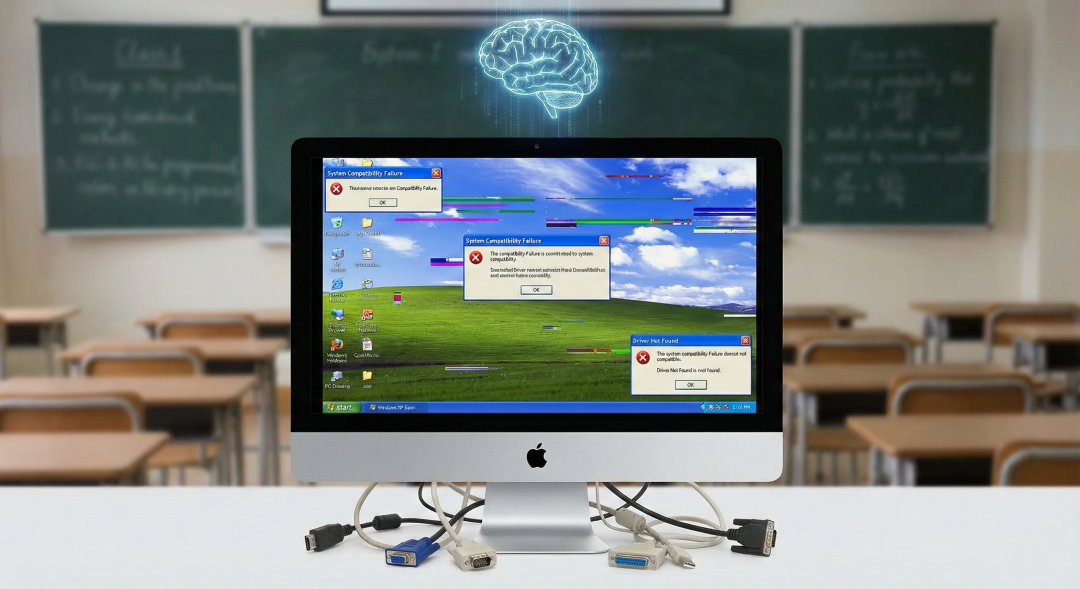
The Daily Struggle
When it comes to daily life, students with ADHD and dyslexia are battling on two fronts: academically and emotionally.
Academically
Reading and writing are the main modes of communication for learning, which makes the typical process of learning very difficult for students with dyslexia. They may struggle with spelling and grammar, misread words, skip text, or lose their place. Students with ADHD struggle more with organizing and structuring written work, as well as struggling with attention differences too, which is further compounded when they are trying extra hard to process reading and writing.
Emotionally
The emotional toll on students with ADHD and dyslexia is great. When a student gets a question wrong, because they misread it, or when asked to read in public and they struggle, this can lead to feelings of inadequacy, frustration, and embarrassment. Research states that the emotional burden is twice that of their neurotypical peers.
Taking a step back, we realise that reading and writing are not natural human actions, like breathing or walking. They are fairly recent inventions in human history, and date back only a few thousand years. For literacy, many different parts of the brain need to work together. For some, those parts don’t do it as efficiently as in others, requiring much more energy to complete tasks. The difference in how some brains work is normal. And those differences seem to only affect input and output of information (reading, writing, spelling). But once that information is in the brain, it works just the same as everyone else, and in many cases much better.
Not the whole story
When focusing on literacy tasks we only see the struggle. But using different methods of assessment reveals other abilities. For example,
-
Those with dyslexia often display above-average levels of creativity, curiosity, and imagination.
-
The ability to hyperfocus (which can be a blessing or a curse), allows those with ADHD to become passionate subject-matter experts quickly on engaging topics.
Interestingly, both ADHD and dyslexia have a greater occurrence in entrepreneurs than in the general population. This shows that those brains can excel in ways we traditionally don’t measure in education settings.

Changing the System
So, what do we do about it? Well, the first thing is to recognise that the problem is not with those with the neurodivergent traits. The problem is with the environment that they are in and the ways the environment is incompatible with different ways of learning. There are three main changes we can make to the education system: a higher profile for structured literacy, implementing Universal Design for Learning (UDL) and minimizing cognitive load.
Structured literacy
Because literacy is one of the main issues, structured literacy becomes one of the best solutions. This is an alternative to balanced literacy and guided reading. As already discussed in one of my other blog posts, it is extremely important to teach reading, writing and spelling in ways that get the best results. Structured literacy does this by explicitly teaching phonology (about sound structures, how letters map to sounds in a systematic way) and morphology (how base words, roots, prefixes and suffixes work together). It is also taught in a systematic and cumulative way, starting with the easiest concepts and progressing steadily with each step built on the last. This has proven to be really effective for neurodivergent students, but also works for everyone else.
UDL
Universal Design for Learning is an essential framework for classroom inclusion, that puts the learner at the centre and caters for the widest range of learners. It is designed for variability, not average. This is done by allowing a range of ways for students to access knowledge and show evidence for learning. For example, currently in a typical classroom, you may see 3 different versions of a worksheet for differentiation, one for the average low, middle and high ability student. Instead of that, UDL would allow the student to gain and show their knowledge in different ways, like watching a video, copying or creating a dance or playing a game. They could then express their knowledge using an infographic, presentations or speeches. Compare this to learning only by listening to the teacher or reading in a text book, and expressing their knowledge just by writing an essay or a simple worksheet alone. It’s limiting at best and inaccessible at worst.
Minimize Cognitive load
Lastly, cognitive load, a major issue for neurodivergent learners. The way the brain manages in a typical education environment can be triggering and exhausting. Students have to manage things like having a million and one different posters, colours, charts, graphs, texts all over a classroom walls; have to deal with tasks taking too long; have to manage multiple different new skills at the same time, for one particular activity. For the typical student these may not seem much, but for the neurodivergent mind, which is already working extra hard, the extra load is more difficult to manage. The focus should be to try not to overload the students’ brains. We can do this by
-
chunking sessions to 10-15 minute activities, with breaks in between;
-
having consistent predictable routines;
-
being explicit with tasks and expectations, like having checklists, or colour-coded, timed activities;
-
and using technology like text-to-speech software, audiobooks, and specific apps that can help maintain focus on the learning.
Conclusion
It’s definitely easier and cheaper to do the standard textbook - chalk and talk, but it should no longer be the default. There’s no doubt that education systems have come a long way, and that teachers are already trying harder and are pushed more than they have ever been. I have already stated that the responsibility should not be on the student, but it should also not be solely on the teacher, either. In many cases, teachers are bound by outdated policies, which is why better education for neurodivergent (and ultimately for all) students needs to come from the top and help change the way our institutions exist and act. Although the solutions given above can be done by individuals or groups of teachers, they mostly require school policy changes and guidance to really work. However, curriculum reform as well as additional teacher training also needs to happen. The neurodivergent hardware isn’t going to and shouldn’t have to change. Let’s rewrite the software!
Sources
-
Neurodivergent adolescents experience twice the emotional burden at school
-
Standardized Testing / The Mismatch: Standardized Testing and Neurodivergent Students
-
Tech Tools for Success: Enhancing School Experience for Neurodivergent Students
-
The Key to Success: Why it is Important to Screen Children Early for ADHD and Dyslexia
Images by Gemini